
As of 23 September 2026, the Democratic Republic of the Congo has reported 7,890 confirmed cases of Ebola, including 3,799 deaths. More than a “disaster of nature,” this reflects the world’s indifference to African peoples.
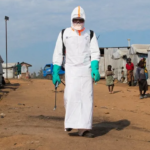
As of 23 September 2026, the Democratic Republic of the Congo has reported 7,890 confirmed cases of Ebola, including 3,799 deaths. More than a “disaster of nature,” this reflects the world’s indifference to African peoples.
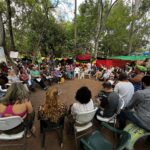
Garifuna protesters camped out in front of the Honduran Supreme Court for several weeks to demand justice for activists facing charges for resisting a violent, illegal eviction in San Juan, Tela. This is due to the new Agro-industrial Development Law, which favors private interests at the expense of rural or urban communities, sparking Garifuna resistance.

The “cockroach” movement in India grew from educational reform to the demand to transform the country’s “democracy.” This new youth movement is fighting to make this a turning point, rather than allow the government’s concessions to disarm it.

Albania’s Flamingo Revolution started after news of a resort deal by Ivanka Trump and Jared Kushner. The protests grew, opposing the Kushners, then the Albanian government and opposition party, revealing a hunger for new beginnings and self-determination.

Recent elections in India have further consolidated Prime Minister Narendra Modi’s drive to make India a nationalist state. The far-right Hindu nationalist group from which Modi emerged recently celebrated its centenary anniversary.

Before Netanyahu and Trump launched their war against Iran, Pakistan and Afghanistan began their own war. To understand this latest outbreak of death and destruction, an understanding of some of the complex history of Pakistan-Afghanistan relations is required.

On October 2025, the Rapid Support Forces, one of the factions waging war against the Sudanese people, took over the city El-Fasher, perpetrating genocide. This is the latest action in a three-year war which is causing the gravest humanitarian crisis of the 21st Century.

Trump expanded both the war on Venezuela and the world’s spiral into war. Its connection to his war to subdue the people in the U.S. was brought home by an ICE agent’s murder of Renee Nicole Good.

Indigenous peoples came en masse to this year’s climate summit, protesting, meeting, and insisting on radical participation. However, they were met with open resistance, feeble responses, and indifference from many countries, especially the rich ones.

The horrendous realities in Ukraine, Gaza, Sudan, Congo, Rio de Janeiro and Venezuela are connected. Several of the world’s powers are implicated. The global capitalist system allows mass murder, rape and genocide to become “normalized.”

People in Sudan are experiencing the worst cholera outbreak in years, as well as destroyed villages and rape as a weapon of war. The upsurge of Sudanese masses in 2019 showed an emancipatory pathway forward when they overthrew Omar al-Bashir’s 30-year dictatorship.

El Salvador President Nayib Bukele’s iron-fisted rule swept tens of thousands into dungeons. The National Assembly changed the Constitution to allow unlimited re-election to the presidency. Illegal mass deportations to El Salvador from the U.S. continue without any due process. Tens of thousands of Salvadorans continue to be locked up and tortured in the inhuman prison known as CECOT.

A year ago, a massive student-led movement overthrew the dictatorial rule of Sheikh Hasina. One year on, where does Bangladesh stand? Women’s experiences show that Bangladesh has a long way to go.

For immigrants—documented or undocumented—the U.S. is becoming a police state. Next year, it could be for the rest of us. The real opposition can only come from citizens and non-citizens protesting and organizing, putting their minds and bodies against a growing fascist state.

The genocidal undertone of anti-immigrant politics, from the U.S. to Iran and from India to Germany, reinforces the fact that Israel’s genocide in Gaza is not some outlandish exception. In the aftermath of Israel’s war on Iran and Iran’s rulers crackdown on their own people, the question arises: Is Israeli’s genocide in Gaza the signal of where this stage of world capitalism is heading if it is not stopped?

On July 7, mostly young men and women marched in Kenya calling for the resignation of the autocratic corrupt government of President William Ruto. Police responded by killing 31, wounding hundreds, and arresting over 500 revealing that it’s the youths’ protests the government fears the most.

The May conflict between these two countries was only the latest of a long series of clashes, indeed wars, over the Kashmir region which both claim. However, this “incident” was particularly ominous as both nuclear-armed powers seemed close to further escalation.

A new turning point has been reached as the Sudanese army has just forced the Rapid Special Forces out of Khartoum. Amid the horrendous level of carnage, not to be forgotten is the need for the Sudanese masses to return to their revolutionary moment.

Letter issued by activists, searching families, artists and writers following the recent discovery of an extermination camp in Teuchitlán, Jalisco, where hundreds may have been executed. The camp was not discovered by the State, but by families of the disappeared.

Anti-Semitism is being fomented by Trumpism and extreme right-wing parties in Europe. At the same time they attack Palestine solidarity as “anti-Semitic.” Its weaponization endangers Jews, for it obscures the line between false anti-Semitism, and the very real anti-Semitism that exists today and that must be fought.

Israel ended its ceasefire in Gaza not with words but with the slaughter of over 400 Palestinians. The genocide and struggle for freedom call for our deepest solidarity with Palestinian masses’ efforts at self-activity, without which self-determination is out of reach.

Who can stop Israel’s genocide against Palestinians? Israel’s citizens need to confront their own rulers for this cycle of madness to end. Those in the U.S. also bear a heavy responsibility, and must pressure the government to stop arming Israel’s genocide.

Ten years after a brutal attack by the police and organized crime resulted in the forced disappearance of 43 students from a Rural Teachers’ College in Ayotzinapa, Mexico. What cannot be forgotten is the living social forces that can transform Mexico root and branch–first of all, the parents of the students, who continue searching for their sons.

A massive movement of students overthrew the dictator and aim for deeper social transformation, which needs to encompass various social forces. Can the needed solidarity between students and workers chart a way forward?

The UK faces a stark reality of empowered anti-immigrant, anti-Muslim racism. Riots have been spreading in Northern Ireland, as well as in Southport, Liverpool, London and other cities in England.

What started as a student protest at universities has become an expression of profound discontent about life in Bangladesh. Can this mass movement grow and force authentic change?

On June 25, young protesters stormed the National Assembly in Kenya protesting a bill raising taxes and prices on imported staples. The protests forced the president to cancel the bill. Grave contradictions exist in this supposedly “stable” country, including multiple dimensions of revolt.

The mass of French voters in the latest parliamentary elections allowed the Left-wing coalition of parties—the New Popular Front—to gain the largest number of seats in Parliament, though far short of a majority. The far-right National Front has hardly been defeated.

Thirty years after the ANC took power, defeating the racist apartheid regime in South Africa, the party decisively lost its majority in the parliamentary elections. How could this happen?
La guerra de Israel contra las masas en Gaza alcanzó proporciones genocidas. ¿Cuándo podrán los palestinos regresar a los lugares donde vivieron y podrán reconstruir? Su autodeterminación debe comenzar con sus ideas y aspiraciones.

Three years after the army staged a coup against the elected government of Myanmar, hundreds of pro-democracy militias, ethnic armies and local defense forces control over half of the country’s territory. Can the unity against the military forge a country with the need for multiple self-determinations?

In the almost two years since the assassination of President Jovenel Moïse, Haiti has reached unprecedented levels of violence and chaos. While violent criminal gangs are causing havoc, whether some of the “gangs” now active in the country are revolutionaries remains to be seen. What is clear is that only social revolution in the hands of Haiti’s masses can bring forth a fully human, free society.

More than a year since two Sudanese generals began warring against each other, the country is devastated. The choice cannot be limited to these two. Only a reigniting of the Sudanese revolution from below can provide a viable pathway forward.
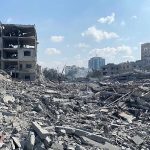
Israel’s war against the masses in Gaza reached genocidal proportions. When will Palestinians be able to return to the places where they lived, and will they be able to rebuild? Self-determination must begin with their ideas and aspirations.

Argentine President Javier Milei aims to privatize state institutions; eliminate regulations on businesses; prevent strikes; and seek full executive powers. Less than two months after taking office, he was confronted by a one-day mass general strike. What kind of society do Argentinians want to create?

On Jan. 15, Bernardo Arévalo was inaugurated President of Guatemala. It was by no means assured that he would be able to take office. What finally allowed Arévalo to do so was a massive Indigenous outpouring. Now, many questions remain, for his government is far from being revolutionary.

The situation for migrants in Mexico is dire: the National Guard is used against newly arrived immigrants; gang members kidnap them and demand ransom from relatives in the U.S.; Mexican and U.S. authorities make the journey to the border excruciating.

After eight years of ultra-nationalist, reactionary rule, Poland’s Law and Justice Party was defeated in parliamentary elections. However, the country’s future direction is by no means assured. Two areas are key: women’s and LGBTQ+ rights.

Venezuela’s president rekindled a territorial dispute with its neighbor Guyana. Not to actually take the territory, but rather to create an issue of patriotism to use in his upcoming re-election campaign.

Argentina’s new President Javier Milei quickly imposed social welfare cuts, while threatening protests. Still, mass resistance from below is developing. Is that enough to break out of the political-economic-social straitjacket that Argentine masses have been living through for decades?
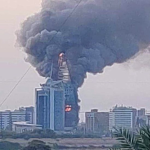
Focused on two regions in Sudan—Darfur, where the Masalit ethnic group live, and the region of Sudan’s capital Khartoum—Eugene Walker looks briefly at what the conflict between two warring Generals has wrought to the country since it began on April 13.
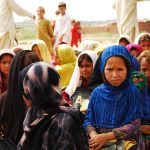
In October, the Pakistani government announced mass deportations for all migrants without papers by Nov. 1, mostly aimed at Afghans and causing great hardship. It decided on this mass expulsion mostly because of the deteriorating relations between Pakistan and the ruling Taliban in Afghanistan.

Hurricane Otis on the coast of Guerrero on Oct. 25 left more than 80% of the hotel infrastructure unusable and hundreds of houses without roofs. The population was already suffering from hunger and organized crime.

Garment workers poured out of factories in Dhaka and other cities in Bangladesh to demand a wage of about $200 a month. The police responded with tear gas and rubber bullets. Bangladesh is the second largest garment-producing country in the world after China.

On Sept. 11, 1973, the Chilean army brutally overthrew the elected government headed by Salvador Allende. This coup should have destroyed, but evidently did not fully destroy, the illusion that bourgeois democracy will allow any authentic socialist transformation process to proceed peacefully.

Torrential rains on Sept. 12-13 caused the collapse of two dams in Derna, Libya. 11,000-plus people were swept away in the flood and over 30,000 displaced. A government spokesman insisted the collapse was “a natural disaster.” Was it?

There is an “Eastern route” for migrants from Africa that crosses Yemen and lands in Saudi Arabia. A new report from Human Rights Watch documents the violence of Saudi border guards against Ethiopian migrants. The U.S. has chosen not to raise the issue publicly.

On Aug. 25, the flag of revolution flew high in villages, towns and cities across Syria. The Syrian revolutionary process of the second decade of the 21st Century was one of the most important developments to arise from the Arab Spring. Now is the time to solidarize with it, a solidarity that has been sorely missing.

The crucial question after the military coup in Niger is what will it mean for Niger’s 25 million plus people? What is their attitude to the present moment? This is the difficult question which few seem interested in exploring.

Eight South American countries met in Brazil for a summit to combat deforestation in the Amazon basin. The summit’s failure to agree on a pact protecting Amazon forests points to the global failure of forging concrete agreements to combat climate change.