We celebrate the life of Ron Kelch, a Marxist-Humanist and a revolutionary for nearly 60 years.
As much of the Left debates how to achieve greater influence in the face of a rising tide of fascism, war, and reaction, this piece reflects on the fatal incompleteness of organization without the organization of thought. The Second International’s detour in the development of revolutionary Marxism shows that it was Marxist organizationally but not philosophically.
‘Pluribus,’ a TV series by Vince Gilligan, presents his post-capitalist dream. Humanity is turned into a single consciousness, which reshapes the world. Both for the deep philosophical issues it tackles and for its artistic value, it is a show worth watching.
Worldwide, over 500,000 content moderators work for global internet corporations. The work is performed by an increasingly female and young adult workforce in low-income countries. They have been organizing unions to deal with the job’s hazards.
Nepal’s 2025 protests reflect a generation’s deep frustration with economic, social, and political marginalization. Youth recognizing their collective disadvantage even without formal organization is an emerging “class consciousness,” though it has not yet achieved a revolutionary transformation.
Muhammad Adel Zaky argues that neoclassical economics aims to produce knowledge devoid of humanity, conflict, or memory. Schools and universities have become a theater of indoctrination. To liberate political economy and education from this prison is a civilizational emergency.
Part I of Franklin Dmitryev’s Organization Report, The Idea of Freedom Strikes Back, given to the Convention of News and Letters Committees on May 31, 2025, takes up the attacks on freedom movements as not just an attack on facts. It is a rush to totalitarian thought control. It is an attempt by the oppressors to project the false idea that resistance is futile, and you are powerless. It is also a confession that radical ideas are dangerous which implies a recognition that the ideas, imagination and philosophy are consequential.
The 20th century revealed statist socialism to be a dead end. It is a substitute for the self-activity of the masses in motion, which is the only basis for workers’ control of the labor process. Without revolutionary humanist philosophical mediation capitalism will reconstitute around us and block the total reorganization of society. The philosophy of revolution demands an organizational expression.
In this review of ‘Marxist Economic Theory’ by Ernest Mandel, Dunayevskaya criticizes Mandel’s denuding economic categories of their specifically capitalistic nature, and his distortion of Marx’s theory of crises.
Farsi translation of the lead article “The U.S. election as manifestation of counterrevolution.”
Facing Trumpist attack on public schools, teacher Susan van Gelder traces history of the struggle in the U.S. for free education, from Reconstruction to the present. She highlights what we must fight for and the forces of retrogression.
Counterrevolution is the guiding principle of the Trump campaign and the dominant characteristic of politics worldwide. Although revolution does not appear to be on the horizon in the U.S. or in most other countries, capitalism is stumbling through a global crisis, both economic and ecological, psychological and communal.
Review of the book ‘El capital amoroso’ by Jennifer Guerra, a five-part essay that challenges our ideas and practices of love in modern society, and aims to restore its revolutionary meaning.
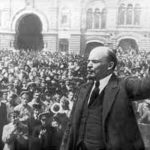
Third and last part of Dunayevskaya’s presentation on “Hegelian Leninism.” Here, the author deals with the transformation into opposite of the 1917 Russian Revolution, Lenin’s seven last years (1917-1924), and what has happened with Marxism and Socialism since then, including her critique to the thought and practice of Mao Zedong.
This essay explores Marx’s Idea of Absolute Freedom as the foundation for overcoming today’s retrogression. Marx’s view of labor as “the prime necessity of life” connects with his whole dialectical view. The essay explores Dunayevskaya’s reading of this passage, and criticizes partial outlooks.
Part VI and last of the 2024-2025 Draft Perspectives. Takes up the organizational and philosophical tasks posed by News and Letters Committees for the year to come.
Part two of Dunayevskaya’s presentation on “Hegelian Leninism.” Here, the author deals with the concept of self-determination of nations revisited by Lenin as an integral part of the dialectics of liberation after his study of Hegel in 1914-1915, as well as with his differences with other Marxists and members of the Russian Communist Party.
Part one of Dunayevskaya’s presentation on “Hegelian Leninism.” Here, the author deals with the revolutionary meaning of the break in Lenin’s thought with his return to Marx’s roots in the Hegelian dialectic in 1914-15 after the betrayal of the Second International and the beginning of World War I.
In this essay, originally published in the March 1985 N&L, Erica Rae takes up the new kind of education arising in the 1871 Paris Commune. She focuses on the role of women during this historic turning point, especially the revolutionary educator Louise Michel.
As part of renewed attention to the Marxist-Humanist concepts of dialectics of organization and philosophy, we begin with Dunayevskaya’s 1987 exploration of how it is illuminated by Karl Marx’s 1844 philosophic moment, in particular his “Critique of the Hegelian Dialectic.”
For the 60th anniversary of the groundbreaking “American Civilization on Trial: Black Masses as Vanguard,” we present a section from the introduction to the pamphlet’s first edition–at the very time when right-wing forces are trying to prevent the teaching and discussion of the true history of the U.S. and especially the freedom movements that run through that history.
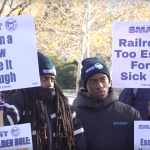
Congress has done its best to become the nation’s strikebreaker by forcing a five-year contract on railroad workers who had been set to go on strike on Dec. 12.
Bob McGuire reviews the book “Sweet Years of Protest: 1990-2021; A Chronicle of Actions, Ideas, and Events” by Séamas Cain.
Ukrainians’ self-organizing drew in all layers of the population, acting on their passion for independence and freedom from imperial overlords. The new life they have brought to the idea of democracy is deeper than political democracy. Marx’s humanist idea is a future determined by fully realizing that deeper content.
Susan Van Gelder reviews the book “A Spectre, Haunting: On the Communist Manifesto” by China Miéville.
Two hotly anticipated global summits on ecology and climate papered over a raging war of capital against humanity and Planet Earth—a war manifested in open conflict between “developed” and “developing” countries, but more deeply in a war of the two worlds of rulers and ruled within each country.
Congress has done its best to become the nation’s strikebreaker by forcing a five-year contract on railroad workers who had been set to go on strike on Dec. 12. Union members in four of the 12 unions had voted to reject a tentative agreement that negotiators had reached with six major rail carriers in September.
Curtis reports on the state of electoral politics in Michigan, including racism, violence, misogyny and fraudulent Trump supporters.
The coup that Xi Jinping had long planned to cement his control of the Communist Party of China went according to script: Xi was re-elected to a third five-year term as leader at the Party Congress that ended on Oct. 23.
Wislanka reviews Lea Ypi’s ‘Free,’ a testimonial of experiencing both “socialism” and then a Western style of life in 1990’s Albania, and relates it to the present moment. The book asks what freedom means and the essay takes it deeper in the new context of wars, fascism, resistance from below and the self-development of the idea of freedom.

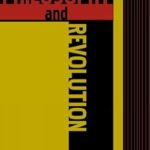
This letter expands on the reason for writing Philosophy and Revolution, and on the concepts of “woman as revolutionary reason as well as force” and “new forces and new passions” of revolution. It illuminates Dunayevskaya’s view of multilinearity in Marx’s late writings as a dimension of his concept of revolution in permanence concerning not only class but all social relations, and speaks to the question of method in today’s debates about sexuality, women’s liberation and new subjects of revolution.
Readers’ Views on Hegel’s Third Attitude; Capital, Fascism & Revolution, Grasping the Spirit of the Times, and Voices from Behind Bars
Readers’ Views on Abortion Rights Struggles; Ukraine, Russia and the Left; Marx and Transgender; World Food Crisis; Normalized Domestic Violence, and Ecuador’s Uprising
The pretext for China’s genocidal campaign against Uyghurs was “Countering Religious Extremism.” Under China’s “anti-terrorism law system” a new UN report states, “acts of legitimate protest, dissent and other human rights activities or of genuine religious activity fall within terrorism.”
Kei Utsumi touched many lives before his death on July 15, a few days shy of his 87th birthday. In conversations with friends, in being present at countless demonstrations, or in putting pen to paper, his was a passionate, unyielding voice for freedom movements, which will be sorely missed.
With Russia’s war on Ukraine, a food crisis is emerging globally with lightning speed. Capitalism, with its agricultural-industrial system of commodity food production for the world market, is the cause of, and suffers from the consequences of, multiple, linked crises of war, COVID, and climate. There is radical opposition to this perfect storm of capitalist crises.
Because nothing is more urgent in a time of such crisis than grasping and acting on the spirit of the time in a revolutionary manner, we excerpt a lecture given by Dunayevskaya taking up Hegel’s Absolutes for our day.
With the gutting of Roe v. Wade, the Supreme Court has taken away a human right and stripped bodily autonomy from half the population. It is a giant step towards fascism. What is the answer to such an outrage? It is not the Democratic Party, who couldn’t even rid us of the Hyde Amendment.
Commemorating the 10th anniversary of the historic prison hunger strikes that ended California’s permanent solitary confinement, Faruq and Urszula Wislanka give a retrospective/perspective on our involvement in prison issues with two talks on “Historic hunger strikes: 10 years after” and “Listening to women prisoners with Marxist-Humanist ‘ears’”
‘The 1619 Project’ tackles U.S. history since the first enslaved Africans were brought to Virginia—from multiple perspectives. Each essay is grounded in original sources, scholarly works, interviews and oral histories. Historical events, photographs of ordinary African-Americans and poetry surround each essay, adding a human touch.
The Republican attack against women won’t stop with trashing our right to control our bodies. Hate has worked so well for them that they will also come down harder on LGBTQ+ people, especially Trans people who trample every notion the Right has of “how things are supposed to be.”
‘The 1619 Project’ tackles U.S. history since the first enslaved Africans were brought to Virginia—from multiple perspectives. Each essay is grounded in original sources, scholarly works, interviews and oral histories. Historical events, photographs of ordinary African-Americans and poetry surround each essay, adding a human touch.
Readers’ Views on Absolute Idea and Self-Liberation; Labor and Ecology; Avoiding Race; and Voices from behind Bars.
Discussion article on the question of unity and diversity of struggles, theory and practice, Marxism and other currents of thought, exploring briefly the Zapatista Indigenous movement from 1994 to the present.
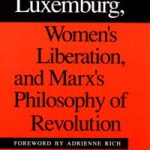
In this talk on the new developments in ‘Rosa Luxemburg, Women’s Liberation, and Marx’s Philosophy of Revolution’, Dunayevskaya takes up her original category of Post-Marx Marxism as a pejorative, as well as the question of the relationship of philosophy to organization
Readers’ Views on: Labor: Teachers Face Politician Bosses; Labor: Automation and the New Humanism; Socialism, Statism and Philosophy; Fake ‘Right to Life’; Eviction Tsunami; Agribusiness vs. Planet; Afghanistan Exploited; Taiwan Faces China and U.S.; Desmond Tutu; With the Migrant Caravan; U.S. vs. Palestinians
Ours is an age of total crises and pervasive angst about humanity’s future. Marx’s recreation of Hegel’s freedom Idea, a humanism that is directly part of life and nature, is a unifying pull of the future in freedom movements and presages “the new society” Dunayevskaya saw in Hegel’s Idea.
Part of a dialogue with the China scholar Jonathan Spence and of the process of writing Philosophy and Revolution, this piece explains “Hegel’s Absolute Idea in terms of what it means to the book and the whole world’s objective development,” taking up the self-activity of African revolutionaries in contrast to state-capitalism, as in Mao’s China, the struggle for world power between the U.S. and USSR, and what happens after revolution.
Many post-Marx Marxists have painted Marx as a materialist. While no one denies the aspects of Marx that are materialistic, to call his philosophy materialist is as accurate as calling his philosophy idealist. Both are key aspects that play a part in shaping human life. Both are important to understanding human life and human activity.