
On Oct. 28, America lost a warrior woman. Dolores Huerta was a co-founder with Cesar Chavez of the United Farm Workers Union (UFW), and its long-term vice-president, but that was just the beginning of a life of action dedicated to all freedom movements.
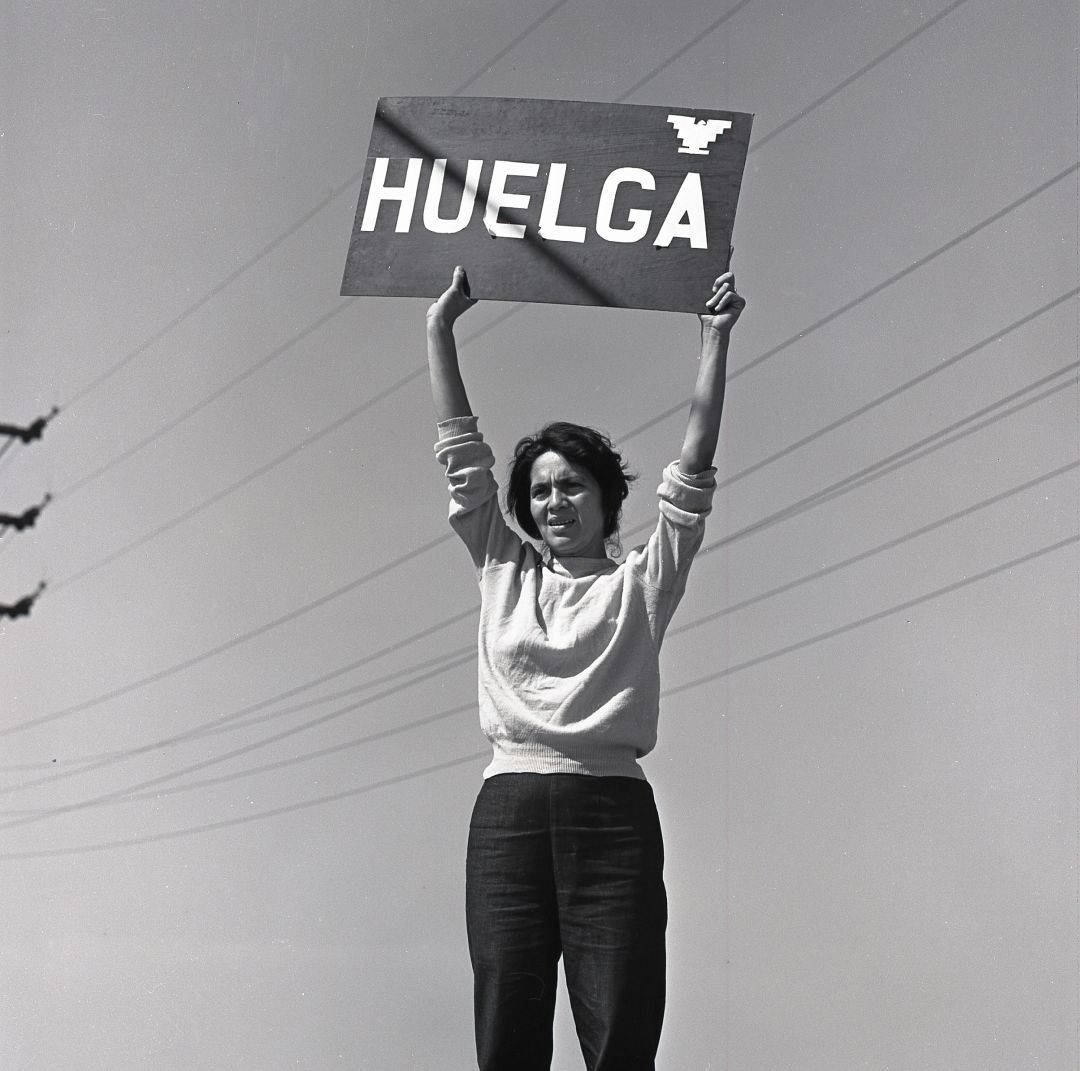
Dolores Huerta holds “Huelga” (“strike”) sign during grape strike, Delano, Calif., Sept. 24, 1965. Image: Harvey Wilson Richards/Harvey Richards Media Archive.
Born in 1930, Huerta grew up in Stockton, Calif., grape country. She left schoolteaching in 1955 to co-found a grassroots social action organization where she met Chavez. By 1962 she, Chavez and Gilbert Padilla started what became the UFW as they joined Filipino workers during the 1965 grape strike in Delano, Calif.
Huerta was a dynamic leader of the 1968-1972 grape boycott which forced powerful grape growers to negotiate contracts with the union for decent working and living conditions, including sanitary facilities in the fields and limits to the use of toxic pesticides. For four years, 17 million Americans boycotted grapes and pressured supermarkets to stop buying and selling them. The rest of Huerta’s life of struggle is a continuous evolution of thinking and action, broadening and deepening her concept of human freedoms as movements grew and challenged old ideas. The Dolores Huerta Foundation she led since 2002 reflects her philosophy and method of person-to-person grassroots organizing.
CHIEF NEGOTIATOR AND ORGANIZER
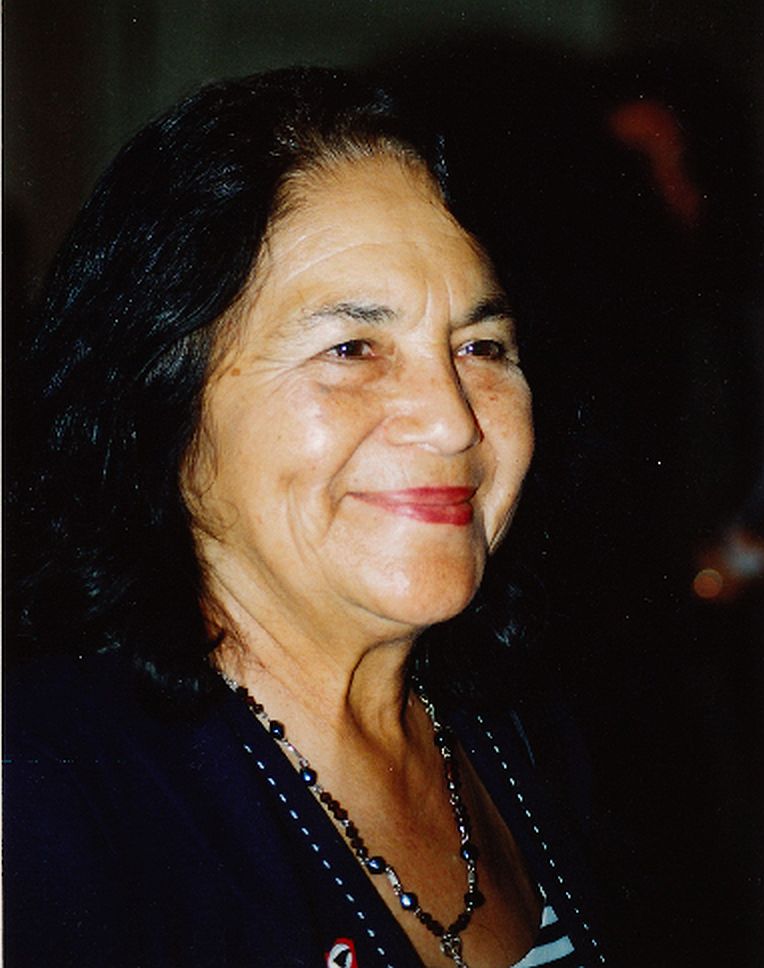
Dolores Huerta in 1999. Photo: John Mathew Smith & www.celebrity-photos.com, CC BY-SA 2.0
As the UFW’s chief negotiator and organizer, Huerta led with focus beyond fields and wages to challenge the harm to farmworker families, the consumer public and the environment from pesticides. As a Latina and mother of many children, Huerta fought racism, educational inequities, male chauvinism and outright emotional and physical abuse within the union leadership, including from Chavez. Despite disagreeing with the middle-class emphasis of leaders like Gloria Steinem, women’s liberation informed and strengthened Huerta since the early days of the movement.
It took five years and an affiliation with the American Federation of Labor and Congress of Industrial Organizations (AFL-CIO) before an historic agreement was signed that reduced pesticides in the fields and initiated unemployment and healthcare benefits. Her call of ‘sí se puede!’ spread to farmworkers in other areas and, as some of her biographers noted: “when President Obama awarded her the National Medal of Freedom in 2012, he confessed he had drawn his campaign slogan, ‘yes we can,’ from Huerta’s inspiring words.”
Huerta never stopped her work for freedom and workers’ control of their labor. She moved on to a national lettuce boycott in the 1970s and agitated for the 1975 Agricultural Labor Relations Act, opening the door for farmworkers’ collective bargaining. Never limiting herself to working for laborers in the fields, she continued to fight for environmental justice and of course women’s rights. Nothing stopped her, be it the 25 times she was arrested or when she was beaten by cops in San Francisco.
CHAVEZ AS SEXUAL PREDATOR
In March 2026 The New York Times’ investigation into reports that Cesar Chavez sexually abused young women profoundly shocked UFW members and millions of supporters, especially when Huerta verified that Chavez had raped her twice since 1960. Pulitzer Prize-winning journalist Maria Hinojosa, a close friend, interviewed her. Huerta said in part:
We have to look at the sea of all of the things that we accomplished for farm workers; you know…to be treated as decent human beings out there in the fields. And we’re talking about millions of farmworkers… [I]n my mind, when people say, ‘Why didn’t you—why didn’t you leave? Why didn’t you tell people?’ Well, this is why, because I felt that my coming out and saying what occurred would hurt the movement…I think that women, when they do come forward with their stories, instead of getting the kind of support that they need, they get attacked, or they’re not believed. And we’ve seen this happen throughout history.
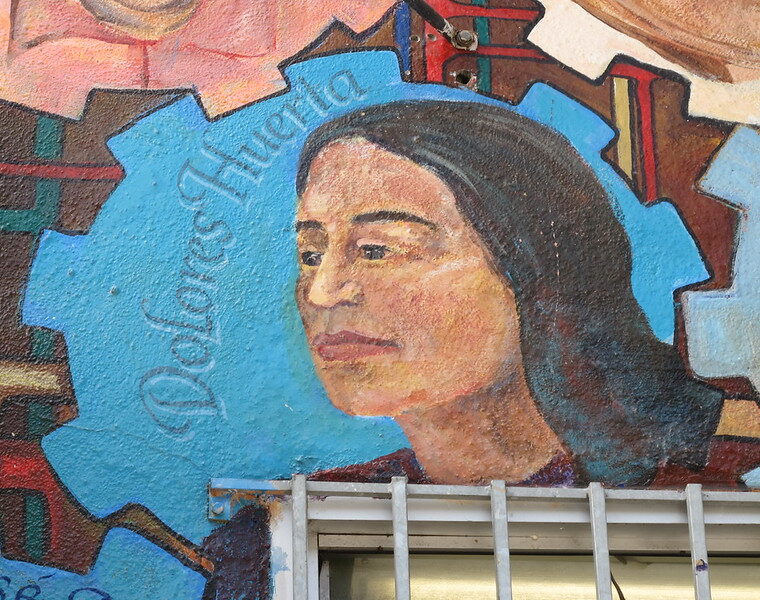
A portrait of Dolores Huerta gracing the facade of a video store on 23rd Street near Capp in San Francisco. Photo: Gary Stevens, CC BY 2.0
Karl Marx wrote that the man-woman relationship was the ultimate measure of how “human” homo sapiens had become. The explosion of the Women’s Liberation Movement in the mid-1960s concretized Marx’s concepts of a revolutionary human society, one in which women and men could fully live their humanity. In doing so it also revealed the depth and pervasiveness of women’s abuse in all areas, including within the Left. Everything, and at the deepest levels—from the economy to most certainly religion, and from politics to sex—instills a near universal self-blame and shame among women.
No doubt it was the revelations about Chavez’s abuse of young girls and women that freed Huerta to speak, as she recognized the deeply rooted pattern of sexual abuse and the long-lasting damages girls suffer. That a visionary who was so strong, generous and compassionate as Huerta did not readily break free of internalizing her own suffering yields a lesson: keep our vision on a revolutionary human society where internalized blame and shame can no longer flourish.
When women join together with a philosophy of full liberation to overcome their oppression, they can see that oppression and abuse as a pattern, rather than internalizing a deep, stubborn sense of individual fault and failure.
In 2026 Huerta’s feminism resonated with Brenda Fernanda Verano, a young Latina journalist who captured how Huerta had changed so many lives: “I realize that at the core of her advocacy around workers’ rights, LGBTQ+ issues, immigrant protections and more were women, and her desire to see them flourish, empowered and unshakable.”
“Unless women are completely liberated in every way, shape or form, we will not have social justice anywhere,” Dolores had told her.
“For I too dream of a future where women are able to live abundantly and without fear—of war, systemic oppression, sexism and patriarchy. Dolores will be my north star when I think about a liberated woman who, even until her last day, spoke loudly and passionately about who and what she loved, but even more about the issues she didn’t align with and refused to conform to. May her warrior spirit rest in peace.”
–Susan van Gelder