
Worldwide, the refugee crisis is unprecedented and is fueled by war, terrorism and climate change. The worldwide response is paltry with country after country turning away or deporting frantic and desperate people in search of a safe haven.
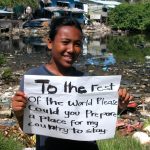
Worldwide, the refugee crisis is unprecedented and is fueled by war, terrorism and climate change. The worldwide response is paltry with country after country turning away or deporting frantic and desperate people in search of a safe haven.
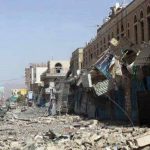
Under the control of religious armed militias, Yemenis live a humiliating life and die in insulting ways! Now death is the closest thing to Yemenis, whereas our dreams have become impossible.
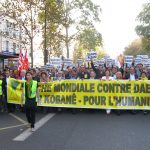
The late Syrian writer Alisar Iram, for one, saw where IS/Daesh were heading, long before they took their hammers into the Mosul Museum.

Another savage sexual assault and murder—this time in Turkey—brought forth thousands of demonstrators, mostly women, throughout the country and beyond. Özgecan Aslan was a student taking a bus home. Worldwide, women are not only railing against sexism and challenging men to change what is often deadly behavior and when not deadly, deeply oppressive; they are as well explicitly extending their critique to the state itself.
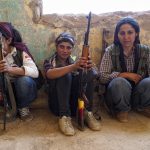
A correspondent writes: For years now Rojava (“Syrian Kurdistan”) has been making perhaps the most advanced revolution we will see anywhere in our lifetimes practically alone.
From the September-October 2014 News & Letters
THE FREE SPEECH MOVEMENT AND THE BLACK REVOLUTION
I am in the movement still because of the Free Speech Movement (FSM)—it turned my life around. I studied everything about the New Left. I came to Berkeley and decided this is where I needed to be. [=>]
The explosive advances of the army of the self-proclaimed Islamic State (IS), crossing from Syria into northern and central Iraq, have brought deeper miseries to the Iraqi people who might have expected they had already endured the worst, including the effects of U.S. imperialist policy. Atrocities from mass shootings and beheadings to systematic kidnapping and rapes of women—that the world and U.S. foreign policy ignored when IS carried them out against anti-Assad revolutionaries in Syria—in Iraq no longer remained hidden.

A lightning offensive saw Iraq’s second largest city, Mosul, fall to the insurgents. The pattern extended itself to Tikrit, farther south, then Samarra, and the battle spread to the oil refining center of Baiji. Most of this was first attributed to ISIS. The question was asked, then: Why and how could a well-armed force of 20,000 Iraqi troops, armed and trained by the U.S., dissolve in the face of 800 terrorists?
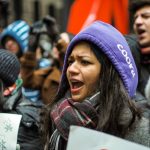
Revolution and counter-revolution contend now, while the prolonged global capitalist economic crisis refuses to end. The question arises: where is the needed banner of total uprooting of the system and creation of new human relations as the goal? This objective need is present in every struggle from outright revolution in the Middle East to movements in the U.S. Beset by attacks and contradictions, they have in turn sparked counter-revolutions.
In Ukraine, an unexpected eruption of mass struggle led to the overthrow of Ukraine’s corrupt, oligarchic, and ultimately murderous President Viktor Yanukovych. In Bosnia, at the same time, massive, nationwide discontent with the corrupt system left in place when the 1995 Dayton Accords partitioned the country has led to the equally unexpected creation of new forms of democratic organization.
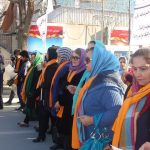
While experiences in the squares of the Arab Spring, in Turkey’s Gezi Park, in the streets of Spain and Greece, and in the U.S. Occupy Movements have revealed moments of what new human relations between women and men could look like, those moments of hope and exhilaration have been followed by devastating reaction and retrogression.

“If there was no revolution in Syria, I almost feel like there would be no reason for me to exist. You don’t get tired of it. Revolution is what brought us together, as Syrians, for the first time.”