
As of 23 September 2026, the Democratic Republic of the Congo has reported 7,890 confirmed cases of Ebola, including 3,799 deaths. More than a “disaster of nature,” this reflects the world’s indifference to African peoples.
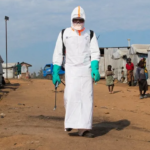
As of 23 September 2026, the Democratic Republic of the Congo has reported 7,890 confirmed cases of Ebola, including 3,799 deaths. More than a “disaster of nature,” this reflects the world’s indifference to African peoples.

Takes up: a harsher anti-LGBTQ+ bill in Senegal; the celebration of Galway Pride in Ireland; the first Transgender and Non-binary Pride and History Month in Michigan; and responses to the new petty anti-LGBTQ+ Florida law outlawing rainbow crosswalks.
Takes up: Colombia’s legislation against female genital mutilation; women protecting the Afi Mountain Wildlife Sanctuary in Nigeria; and England’s National Health Service inquiry into serious issues at the maternity departments of Nottingham University Hospitals.

Takes up: Afghan Women United recognized by FIFA as Afghanistan’s official national women’s team; the life of Marjane Satrapi, Iranian-French author, film director and actor; and a demonstration in Nairobi, Kenya, against inefficient investigations of femicides and child disappearances.

Takes up: middle school students protesting the ban of a symphony honoring the Stonewall Uprising; a protest in Australia against gender-affirming care restrictions; and a lawsuit in Botswana to make same-sex marriage legal.

On October 2025, the Rapid Support Forces, one of the factions waging war against the Sudanese people, took over the city El-Fasher, perpetrating genocide. This is the latest action in a three-year war which is causing the gravest humanitarian crisis of the 21st Century.

Appeal to help free Ibtissame Betty Lachgar, a Moroccan feminist and human rights defender imprisoned for a peaceful act of expression.

Takes up: Mary “May” McGee, who won a 1973 Irish Supreme Court case legalizing contraceptives; Despite a Nov. 6 protest of over 10,000, the Latvian parliament voted to exit the Istanbul Convention against violence against women; Women for Change in South Africa organized a protest against a femicide rate five times higher than the global average.

The horrendous realities in Ukraine, Gaza, Sudan, Congo, Rio de Janeiro and Venezuela are connected. Several of the world’s powers are implicated. The global capitalist system allows mass murder, rape and genocide to become “normalized.”

Takes up: UK Supreme Court ruling that sex assigned at birth determines legal sex; anti-gay legislation in Burkina Faso; a Takatapui exhibit in Aotearoa/New Zealand; advances for rights of Intersex people in Europe; and protection of Trans and Intersex people in Pakistan.

People in Sudan are experiencing the worst cholera outbreak in years, as well as destroyed villages and rape as a weapon of war. The upsurge of Sudanese masses in 2019 showed an emancipatory pathway forward when they overthrew Omar al-Bashir’s 30-year dictatorship.

Takes up: an orphanage who cares for children with disabilities in Uganda; Nova Scotia’s New Student Code of Conduct; a protest against President Trump’s big bill on Capitol Hill; and Alberta’s Premier Danielle Smith stealing money from the Canada Disability Benefit.

On July 7, mostly young men and women marched in Kenya calling for the resignation of the autocratic corrupt government of President William Ruto. Police responded by killing 31, wounding hundreds, and arresting over 500 revealing that it’s the youths’ protests the government fears the most.

What kind of new world order is Trump heading for? Forced annexation of territories (as in Russia’s war on Ukraine), genocide (as in Israel’s war on Gaza), and neocolonialism (as in the Democratic Republic of Congo) are crucial parts of it. The word “multipolar” cannot hide its imperialist nature.

A new turning point has been reached as the Sudanese army has just forced the Rapid Special Forces out of Khartoum. Amid the horrendous level of carnage, not to be forgotten is the need for the Sudanese masses to return to their revolutionary moment.

Takes up: Three Thai women rescued from a human egg farm in the country of Georgia; the third African Women in Dialogue conference; and the UN Human Rights Committee ruling Ecuador and Nicaragua responsible for violating the human rights of three girls denied abortions.

Takes up: Sixteen days of activism in Ivory Coast opposing violence against women; a demonstration against violence against women in Kenya; technology intended to monitor wildlife in Northern India being misused to harass and intimidate women; and the European Court of Human Rights rejects the challenge against France’s anti-prostitution law.

Takes up: Draft law for civil partnerships in Poland; Gay men and Trans people attacked in Ivory Coast; Trans woman Jin Xing’s adaptation of the play ‘Sunrise’ blocked in China; and Lesbian writer Sylvia Townsend Warner honored with a statue in Dorchester, England.

View of the struggle and rights of people living with disabilities: an art series depicting youth with disabilities in Nigeria, Kenya and Senegal; a seminar for women with disabilities in Tanzania; Disability Pride in the U.S. and Canada; a protest in Brussels against segregation in residential care homes.

The Mauritian organization LALIT expresses its opposition to the UK-Mauritius Chagos Agreement, which formally recognizes the sovereignty of Mauritius over the Chagos Archipelago but authorizes continued operation of the U.S. military base on Diego Garcia for the next 99 years!

Takes up: the documentary ‘Old Lesbians’; the Taliban’s law granting authority to arrest anyone violating its 35 articles, which especially oppress women; 19 Afghan women arriving in Scotland to complete their medical degrees; and the National Assembly in The Gambia voting for female genital mutilation to remain illegal.

Queer Notes columnist Elise presents a bird’s-eye view of the advances and retrogressions in the struggle for freedom of LGBTQI+people worldwide, from Uganda and South Africa to Indonesia, from Poland and Czech Republic to the U.S. and Canada.

What is happening in Sudan is not civil war but a war on the Sudanese people by two generals fighting each other. Sudan’s masses’ revolutionary process, begun in 2018, must not be forgotten for they have not forgotten the revolutionary movement they created.

On June 25, young protesters stormed the National Assembly in Kenya protesting a bill raising taxes and prices on imported staples. The protests forced the president to cancel the bill. Grave contradictions exist in this supposedly “stable” country, including multiple dimensions of revolt.

Takes up: Protest in Brazil against a bill that equates abortion after 22 weeks with homicide; the 4th World Congress for the Abolition of Prostitution in Montreal; women outdo fundamentalists in Turkey’s local elections; and the cancellation of a state-sponsored mass wedding of 100 orphaned girls and young women in Nigeria.

Thirty years after the ANC took power, defeating the racist apartheid regime in South Africa, the party decisively lost its majority in the parliamentary elections. How could this happen?
El feminicidio (el asesinato de una mujer por ser mujer) está aumentando en todo el mundo, al igual que las manifestaciones en su contra. En esta lucha se puede ver algo de la visión de futuro implícita en este movimiento: una sociedad en la que las mujeres sean comprendidas como seres humanos libres. La clave está en la “totalidad y profundidad del necesario arrancar de raíz”.

Takes up: The public outcry that restored a talk by a gay actor to middle school students in Pennsylvania; a bill signed by Great Britain to deport people to Rwanda, a country not safe for the LGBTQI+ community; LGBTQ+ curricula being included in Washington state’s public schools; and three extraordinary support groups for 2SLGBTQ+ in Latin America.

More than a year since two Sudanese generals began warring against each other, the country is devastated. The choice cannot be limited to these two. Only a reigniting of the Sudanese revolution from below can provide a viable pathway forward.
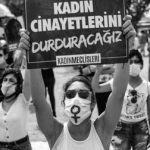
Femicide—the murder of a woman because she is a woman—is on the rise across the world, as are demonstrations against it. In this struggle can be seen some of the vision of the future implicit in this movement: a society in which women are comprehended as free human beings. Key is “the totality and depth of the necessary uprooting.”
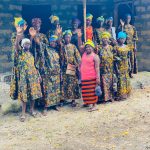
Takes up: Amazonian Initiative Movement, a Sierra Leone group fighting genital mutilation (FGM); a two-year, 7,400-mile caravan journey through 20 African countries by #FrontlineEndingFGM; Asian Women for Equality struggling to stop massage parlors and other venues of prostitution in Canada; and France becoming the first country to explicitly guarantee women’s legal right to abortion in its constitution.
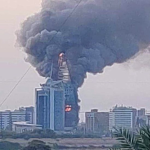
Focused on two regions in Sudan—Darfur, where the Masalit ethnic group live, and the region of Sudan’s capital Khartoum—Eugene Walker looks briefly at what the conflict between two warring Generals has wrought to the country since it began on April 13.

Torrential rains on Sept. 12-13 caused the collapse of two dams in Derna, Libya. 11,000-plus people were swept away in the flood and over 30,000 displaced. A government spokesman insisted the collapse was “a natural disaster.” Was it?

The contributions and contradictions of the African revolutions of the 20th century speak to today’s very different situation. These excerpts from Dunayevskaya’s ‘Philosophy and Revolution, from Hegel to Sartre and from Marx to Mao’ aim not only to recapture the greatness of those revolutions, but also grapple with why they retrogressed after independence, so as to aid the creation of new beginnings now.

There is an “Eastern route” for migrants from Africa that crosses Yemen and lands in Saudi Arabia. A new report from Human Rights Watch documents the violence of Saudi border guards against Ethiopian migrants. The U.S. has chosen not to raise the issue publicly.

The military coup against Gabon President Ali Bongo on Aug. 29, 2023, was welcomed with jubilation in Gabon’s capital, Libreville. Whether that leads to a move toward civilian participation and something approaching democracy remains to be seen.

The crucial question after the military coup in Niger is what will it mean for Niger’s 25 million plus people? What is their attitude to the present moment? This is the difficult question which few seem interested in exploring.
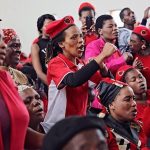
On Aug. 9 we honor women who gave their lives in struggle. We cannot continue to accept the violence that is all around us. We need to build a peaceful society in which there is full equality between men and women, a society in which land, wealth and power are shared.

More than 50,000 migrants are known to have died worldwide since 2014, revealing inhuman conditions that force so many people to flee their homes, indifference of governments, and official acts that caused the deaths of hundreds of migrants.
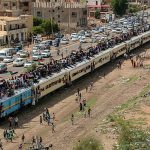
Since the April outbreak of fighting between rival forces in Sudan, civilians have suffered and died. Willfully forgotten is the Sudanese Revolution of 2018-19 and the powerful participation of the Sudanese masses who carried it out.

After Nahel Merzouk, a teenager of Algerian-Moroccan descent, was killed by police at a traffic stop in a Paris suburb, French youth, many of North African descent, responded with outrage. How did France come to this explosive moment?
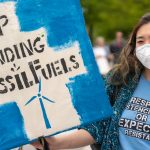
The oil companies and allied capitalists and politicians admit the need for a transformation of economies in the face of the climate emergency, but have managed to frame it as an energy transition. That is a political and ideological victory narrowing the transformation down to a technological-centered change. Thus the transition, as it is being designed, is a nontransformational transformation that will solve nothing—and climate militancy continues.
Tunisia’s President Saied demonized Black immigrants from sub-Saharan Africa as the latest move in his authoritarian takeover.
A critical update after the collapse of the five-month “truce” between Ethiopian government troops and the Tigray Peoples Liberation Front. Even before the ceasefire breakdown, the specter of mass starvation loomed over the people of Tigray.
A view of the Aug. 10 protest in Freetown, Sierra Leone, its causes and its immediate aftermath
Prisoner Easley discusses how capitalist imperialism worsens the monkeypox epidemic and other crises.
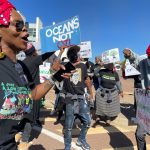
Country after country reacted to the war by increasing oil and gas trade and production. Only movements from below can keep the fossil fuel capitalists from turning the opportunity for a greener, freer future into opposite.
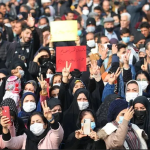
With Russia’s war on Ukraine, a food crisis is emerging globally with lightning speed. Capitalism, with its agricultural-industrial system of commodity food production for the world market, is the cause of, and suffers from the consequences of, multiple, linked crises of war, COVID, and climate. There is radical opposition to this perfect storm of capitalist crises.
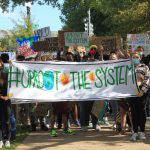
The battle over the latest UN report on climate change laid bare the stark alternative between business as usual and the forces fighting for social transformation to stave off catastrophe. Protesting scientists called for “climate revolution.”
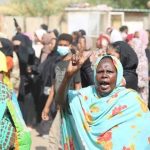
Congo’s joining the East African Community epitomizes the plans being made over the heads of the African masses. The contradictions between the people, local capitalists and other power brokers, and world imperialism will intensify as these developments go forward. In effect, the elites would like to create a mechanism for mediating social contradictions in the wake of Sudan’s revolution.