
by Adele
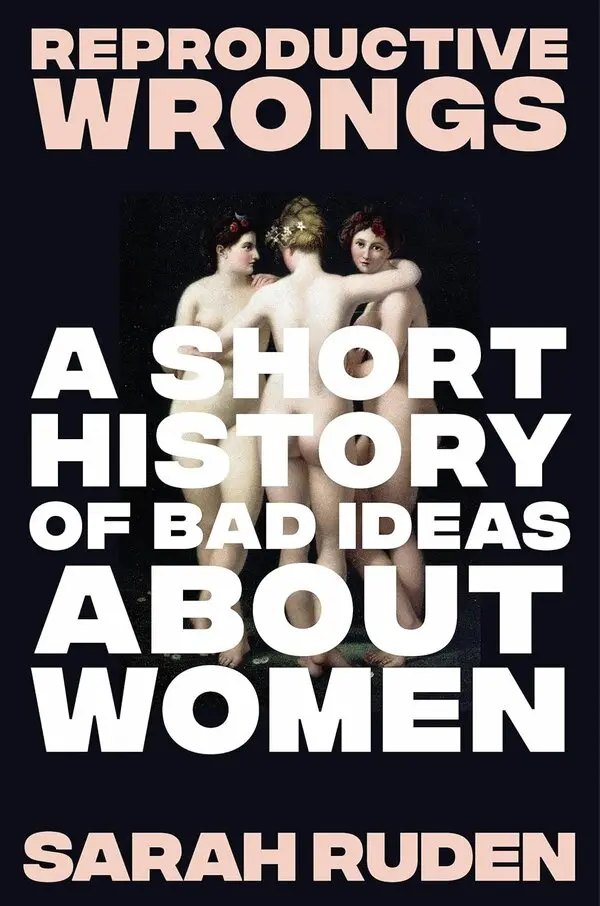
Reproductive Wrongs: A Short History of Bad Ideas About Women by Sarah Ruden examines why right-wing politicians and religious leaders promote propaganda against reproductive rights. Prohibiting abortion and contraception makes life harder for women, families, and society. Even when abortion could save lives of women suffering pregnancy complications, right-wingers will not admit this. They insist that no pregnancy is truly a crisis because the outcome is always “God’s will.” They believe families with unlimited pregnancies and numerous children are “natural” and good. Abortion is supposed to be the worst defiance of divine law, threatening civilization itself.
Ruden, a cultural historian and translator of classical literature and the Bible, traces the development of this propaganda through Western history. Contrary to fundamentalist beliefs, it was in the best interest of families to only have the few children they could afford. Husbands made the ultimate reproductive decisions, but both married and enslaved women used contraception and abortion.
HISTORY OF ANTI-ABORTION FANATICISM
 Ruden traces the first known anti-abortion propaganda to Ovid. Emperor Augustus sponsored him to write poetry supporting his regime. Augustus wanted to increase the population and appear moral. He did not have the means to actually enforce his laws against abortion, which was then a private matter. Ovid’s poems urged women to think what would happen if mothers of heroes had aborted unwanted pregnancies. Centuries later, this developed into the concept of fetuses as individual persons with divinely ordained destinies.
This was also the beginning of politicians scapegoating women’s reproductive decisions for the actions of men in politics and war. Christian nationalists openly claim abortion will bring God’s judgment upon the U.S., even triggering the end of the world supposedly prophesied by the Bible. It is frequently used as a distraction when citizens demand action on any other issue.
Women leaders, vital to early Christianity, were later viewed as competition by men. The Pastoral Epistles confined them to the private sphere and constant childbearing. Augustine urged Christians to police their own thoughts, purging sexual feelings even when married. These major steps brought authoritarian theocracy into citizens’ personal lives. Heinrich Kramer’s tract, “The Witches’ Hammer,” developed the supposed snare of female sexuality into a frightening, fantastical worldview. The Church made it a sin to disbelieve this, making it possible to commit atrocities.
CAPITALISM NEEDS WORKERS
Charles Dickens’ fiction irrationally depicted numerous births bringing poor families joy rather than ruin. His characters were rescued by improbable coincidences. In real life, industrial capitalism needed a supply of expendable young workers.
The eugenics movement’s rhetoric left a legacy of women feeling compelled to offer their personal circumstances for public scrutiny. Discussion tends to focus on women being “worthy” of abortion rather than demanding this as a natural right for all women for any reason.
A 1995 anti-abortion biography, Gianna, Aborted and Lived to Tell About It by Jessica Shaver Renshaw and a 2011 movie inspired by it titled October Baby, influenced a wave of speakers claiming miraculous survival from being aborted as fetuses. In 2012, an internet-based network of “abortion survivors” began offering a sense of community and purpose. These and other medically impossible scenarios have directly influenced legislation.
Ruden writes: “The totalitarian impulse seeks to create a whole thought system, a system of ethics, a social system, a coherent world with an exclusive claim to common sense, logic, decency, compassion, and responsibility.” Christian nationalism has used propaganda against abortion, contraception, and reproductive rights to do just that. This important book shows we can resist by exposing the history of these false claims and the damage they have caused.