
In-person reports from the October 17 No Kings demonstrations in the Chicago area; Battle Creek, Michigan; and Oakland. Another event in Oakland supported Iran’s “Woman, Life, Freedom” movement.

In-person reports from the October 17 No Kings demonstrations in the Chicago area; Battle Creek, Michigan; and Oakland. Another event in Oakland supported Iran’s “Woman, Life, Freedom” movement.
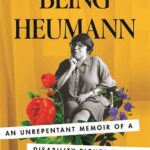
Takes up: The U.S. Department of Justice threatening the rights of people with disabilities; women and girls with disabilities campaign for democracy, human rights and gender equality; and ‘Being Heumann’, a biopic about the late Judy Heumann, known as the Mother of the Disability Rights Movement.
Takes up: a report about disappearances and trafficking of Indigenous Individuals in Canada and the United States; the 2026 Abortion & Reproductive Justice Conference in Nairobi, Kenya; and the Vancouver Committee for Domestic Workers’ and Caregivers’ Rights’ annual march for migrant workers’ rights; and women workers at the Eiffel Tower in Paris went on strike against being told to stay out of sight because a group of visiting sexist monks requested it.
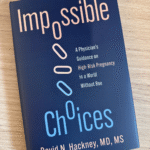
A doctor of maternal-fetal medicine describes the devastating impact that the repeal of women’s legal right to an abortion has had on doctors and women’s reproductive rights. He includes serious medical issues pregnant women and their doctors can face and provides information and motivation to continue the fight.

The “cockroach” movement in India grew from educational reform to the demand to transform the country’s “democracy.” This new youth movement is fighting to make this a turning point, rather than allow the government’s concessions to disarm it.
Takes up: Colombia’s legislation against female genital mutilation; women protecting the Afi Mountain Wildlife Sanctuary in Nigeria; and England’s National Health Service inquiry into serious issues at the maternity departments of Nottingham University Hospitals.
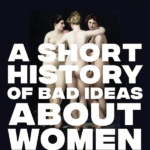
This book by Sarah Ruden traces propaganda against reproductive rights through Western history. It shows that we can resist by exposing the history of these false claims and the damage they have caused.

This book reveals how global society’s failure to eradicate misogyny has allowed abuses and prejudices against women to be perpetuated through computer-based technology.

Takes up: Afghan Women United recognized by FIFA as Afghanistan’s official national women’s team; the life of Marjane Satrapi, Iranian-French author, film director and actor; and a demonstration in Nairobi, Kenya, against inefficient investigations of femicides and child disappearances.

This book cuts through myths about adoption as an alternative to abortion, revealing that while women are pressured to choose adoption, that choice often had a negative impact on their lives.

Traducción al español de Essay “Iran—a country of revolutionaries” by Terry Moon.

Takes up: The tenth anniversary of the French law abolishing prostitution; La Cité Audacieuse, a feminist space in Paris, France; and England and Wales decriminalizing abortion.

Report of the Million Women Rise and Together Alliance marches in London on March 7 and March 28. These demonstrations drew record numbers of people to protest increasing violence, misogyny, racism, and authoritarianism in the UK and worldwide.

Takes up: a yearly 2.5% increase in self-harm cases among people aged 24 and under; proposed UK ban of pornography depicting incest where one person is pretending to be under 18; and the situation of pregnant women and girls in ICE custody.

‘Beyond Limits’ by M.D. Shelley Sella is a book informed by her experience as the first woman doctor in the U.S. openly providing third-trimester abortions. It includes testimonies of her patients and addresses frequently asked questions revealing the necessity of legalizing abortion at all stages of pregnancy.

Takes up: the life of U.S. mathematician Gladys Brown West; and the insufficiency of laws punishing rape in cases in London, Germany and France.

A discussion of what femicide really is, triggered by a definition of the word in the bourgeois press.

Takes up: the first woman-led campaign by Workers Defense Project protesting the working conditions of housekeepers; Canada cancelling the caregiver permanent residency program; and women filing a lawsuit regarding unnecessary medical procedures by gynecologist Javaid Perwaiz.
The essay traces the recent massive revolt in Iran, highlighting the importance of the thoughts of the participants, Iran’s revolutionary history, and the role of a philosophy of revolution and the people’s confidence in their own ideas.

A physician who performed abortions for over 50 years describes his patients’ experiences and the evolving political situation. It reminds activists to be unapologetic about fighting for abortion rights: “Opposition to and psychological warfare against abortion is the principal organizing tool in America for imposing a totalitarian state.”

Takes up: spread of the Nordic Model in Europe, i.e., decriminalizing victims of prostitution while criminalizing pimps and customers; and 2025 International Day for the Elimination of Violence Against Women.

Appeal to help free Ibtissame Betty Lachgar, a Moroccan feminist and human rights defender imprisoned for a peaceful act of expression.

Takes up: UK stories of artists and activists living with disabilities; women in Moldova and Armenia helping women with disabilities be independent; and Sylvain LeMay receiving the Canadian Union of Public Employees National Disability Rights Activism Award.

Takes up: Mary “May” McGee, who won a 1973 Irish Supreme Court case legalizing contraceptives; Despite a Nov. 6 protest of over 10,000, the Latvian parliament voted to exit the Istanbul Convention against violence against women; Women for Change in South Africa organized a protest against a femicide rate five times higher than the global average.

Authors Dr. Curtis Boyd and Dr. Glenna Halvorson-Boyd describe experiences in providing abortion care. The book provides hope that we can defeat authoritarianism and create a compassionate, connected society.

Takes up: the life of anti-gender violence activist Susan Xenarios; South Korean women suing the U.S. military for maintaining a network of prostitution; World Women’s March in Canada; and an anti-femicide march in Argentina.

Four years after the Taliban took over Afghanistan women have been reduced to non-persons with no future possible under their fascist rule. But women continue to fight, declaring: “the fall of Afghanistan was not the fall of our will.”

A year ago, a massive student-led movement overthrew the dictatorial rule of Sheikh Hasina. One year on, where does Bangladesh stand? Women’s experiences show that Bangladesh has a long way to go.

Takes up: A UN Women report about women-led and women’s rights organizations in humanitarian crisis zones; an ongoing epidemic of hundreds of domestic violence cases, including eight femicides, in Nova Scotia, Canada; and UK modernizing its voyeurism laws to keep up with abuses of advances in technology.

Revoking the right to abortion relegated women as less than full human beings. All human rights are up for grabs, and women’s hard-won rights were deemed easy to destroy. Trump has acted accordingly but is running into “the resistance,” with women leading the way.

From immigrants to Transgender people, from workers to students to women, no one is safe. Attacks on many fronts are part and parcel of what is widely recognized as a Trump/Musk coup, but is usually portrayed as normal politics in the media. Institutions cannot be trusted to save us and they need to feel the pressure from people fighting back.

Takes up: the life of feminist philosopher Sandra G. Harding, who coined the term “standpoint theory”; researched effects of online misogyny on British primary and secondary school students; and increasing global rates of incarceration of women.

In many countries misogyny is state policy, be that in the U.S. where abortion bans are killing women or Iran where the new hijab law has draconian punishments. It’s doubtful if Trump et al comprehend the rage and power that opposes their deadly drive for power and riches.

More than 200,000 women took to the streets on March 8 in Mexico City. It was a day of protests, marches and conviviality that lasted more than 15 hours. This was the largest International Women’s Day march in the city in recent years.

“Grooming gangs” in England have lured thousands of girls into prostitution. Only a few abusers have been convicted. Studying successful tactics and groups created by survivors gives us confidence to replace exploitation with a compassionate society.

Maria Teresa Horta, one of the feminist authors of “The Three Marias” who were freed in the Portuguese Revolution, died on Feb. 4. The book was explicitly revolutionary and made clear that to change women’s lives revolution would have to be so deep as to transform human relationships, including sexuality.

President Donald Trump is encouraging deadly hate toward women, Blacks, people of color, LGBTQ people, people with disabilities, and immigrants. It is grassroots responses and mutual aid that can block Trump’s power grab. More forms of revolt will erupt in the face of the downward spiral of this capitalist world in crisis.

Takes up: International Criminal Court prosecutors investigating the Taliban’s horrific laws oppressing women as war crimes; the formation of a “morality police” to enforce new restrictions on women in Libya; and “deepfake” porn targeting girls in Toronto, Canada.

Farsi translation of the lead article “The U.S. election as manifestation of counterrevolution.”

Susan van Gelder reviews ‘Peregrina,’ a multimedia 80-minute one-woman performance, telling the story of femicide in Mexico and the movement of Mexican women to combat it.

Takes up: Sixteen days of activism in Ivory Coast opposing violence against women; a demonstration against violence against women in Kenya; technology intended to monitor wildlife in Northern India being misused to harass and intimidate women; and the European Court of Human Rights rejects the challenge against France’s anti-prostitution law.
Counterrevolution is the guiding principle of the Trump campaign and the dominant characteristic of politics worldwide. Although revolution does not appear to be on the horizon in the U.S. or in most other countries, capitalism is stumbling through a global crisis, both economic and ecological, psychological and communal.

Takes up: Students in Seoul protest plans by Dongduk Women’s University to become co-ed; London conference by the feminist organization Nordic Model Now!, debunking the sex industry; and a mass demonstration in Rome against violence against women.

Poem read by the author, Sunshine Lombré, at an abortion rights demonstration in Evanston, Illinois.

The trial of Dominique Pelicot, who arranged for 82 men to rape his wife, Gisele Pelicot, over 200 times began in September. Gisele successfully fought for the judges to open the trial to the public, igniting a new wave of a women’s movement fighting mysogyny and sexual violence worldwide.

View of the struggle and rights of people living with disabilities: an art series depicting youth with disabilities in Nigeria, Kenya and Senegal; a seminar for women with disabilities in Tanzania; Disability Pride in the U.S. and Canada; a protest in Brussels against segregation in residential care homes.

The fundamentalist, sexist, anti-gay convictions of J.D. Vance, Josh Hawley and Harrison Butker reveal that their movement not only wants to end abortion but control what women think, what we feel, in fact who we are.

After Roe v Wade was overturned after nearly fifty years, what will it mean to be a woman in America and what kind of country is it becoming? This is what the book ‘The Fall of Roe: The Rise of a New America’ explores, reviewed by Adele.

Retired women in Detroit speak for themselves about Project 2025, whose authors are connected to Trump.

On June 25, young protesters stormed the National Assembly in Kenya protesting a bill raising taxes and prices on imported staples. The protests forced the president to cancel the bill. Grave contradictions exist in this supposedly “stable” country, including multiple dimensions of revolt.